

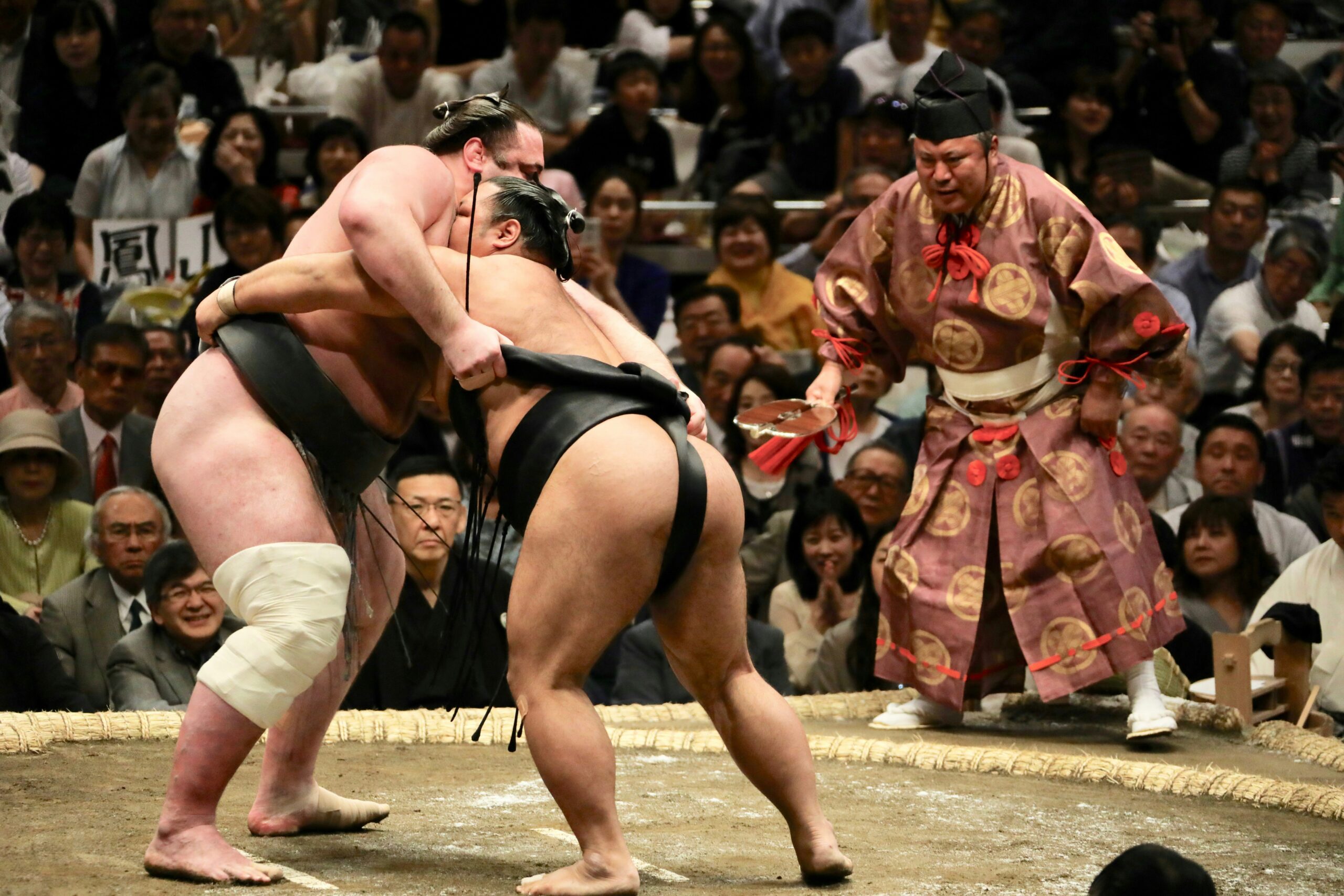
A Dohyo Appears at the Royal Albert Hall
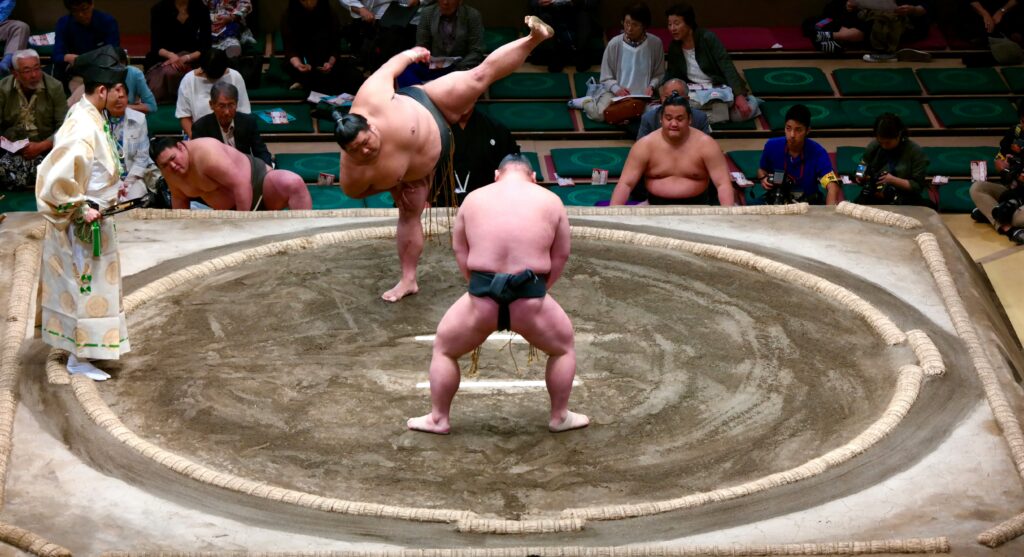
Inside the Royal Albert Hall in London, the sound of salt scattering and the heavy thud of a wrestler’s foot echoed through the air. It was the first time in about thirty years that sumo had been held in this city.
The traditional topknots, the embroidered belts, and even the referees’ robes had crossed the sea just as they are in Japan. While the audience watched quietly, the same ritual movements that have been repeated for centuries unfolded on the ring.
Over 5,400 seats were filled, and tickets for the five-day event sold out completely. The Royal Albert Hall, usually home to orchestras and rock concerts, had been transformed. At its center stood a circular clay ring 4.55 meters wide, surrounded by soft lighting and the faint scent of salt in the air. It was a quiet encounter between two cultures, taking place in one of Britain’s most famous music halls.
Sumo as a Form of Prayer
The origins of sumo go back to the mythical age, when gods tested their strength against each other. Long before it became a sport, sumo was a sacred ritual to pray for good harvests. Stomping the ground was believed to calm the earth, and throwing salt was a way to purify the ring. Sumo was, in its earliest form, a prayer through movement.
During the opening ceremony, Hakkaku, chairman of the Japan Sumo Association, greeted the crowd:
“Sumo is not just a sport or a martial art. It is a Shinto ritual and an important part of Japan’s culture.”
His words captured what sumo still represents today.
In Japan’s oldest chronicle, Kojiki (compiled in 712), gods engage in a contest of strength. From that story comes the expression “to take sumo,” which refers to grasping each other’s hands before the bout begins. Another record, Nihon Shoki (720), describes a match between two men, believed to be the first human sumo.
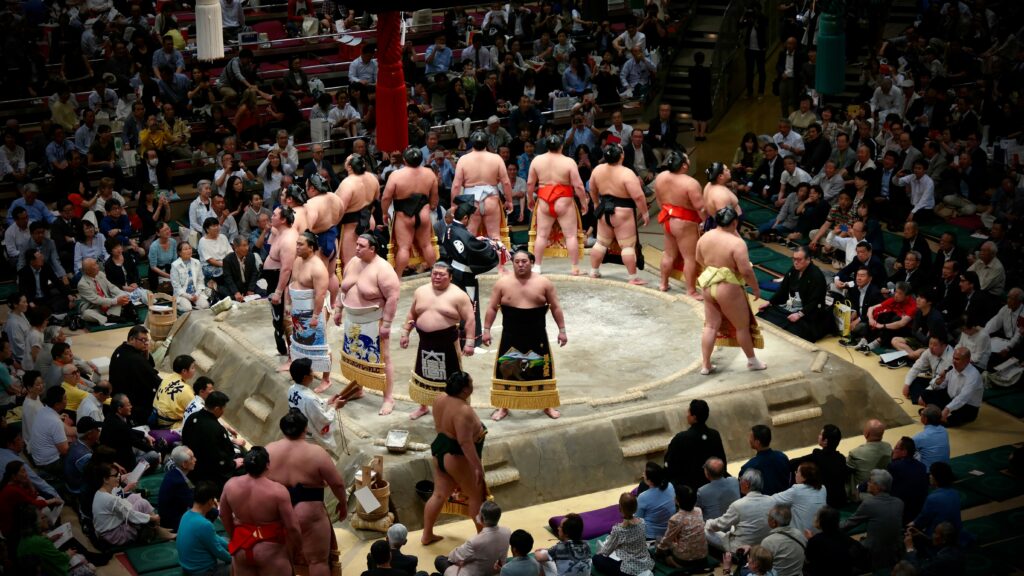
The mawashi, the thick belt worn by wrestlers, is made like the sacred ropes at Shinto shrines, twisted to the left in a counterclockwise direction. Salt, too, has long been believed to have the power to cleanse and protect. Throwing salt over the ring serves the same purpose as a purification ritual at a shrine, driving away evil spirits before a sacred act begins.
When the yokozuna performs the dohyo-iri ring-entering ceremony, the audience often calls out “yoisho” with each stomp. That word, both rhythmic and grounding, carries the same pulse as ancient Japanese prayers to the earth.
From Popular Entertainment to National Sport
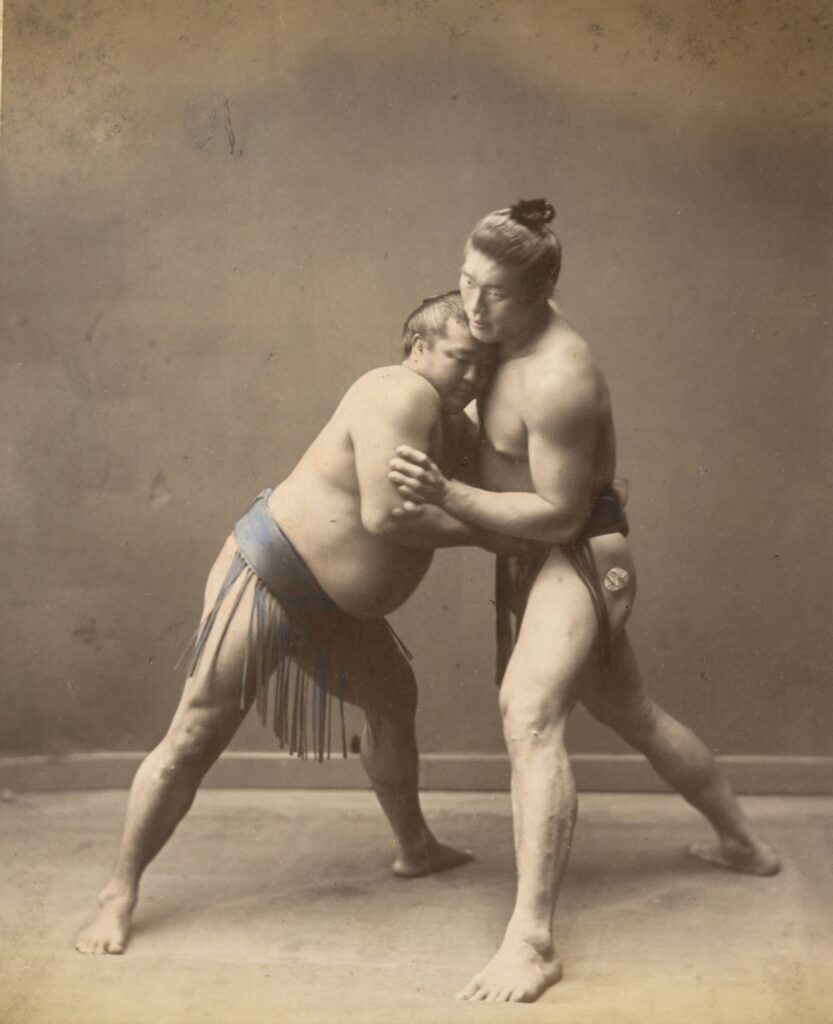
During the Edo period (1603–1868), sumo developed into public entertainment held in the precincts of temples and shrines. Known as kanjin-zumo, these events raised funds for rebuilding or repairing temple halls and gates. Large temporary arenas covered with reed screens were built, with second and third floors to accommodate crowds.
For common people, sumo was a festival, and wrestlers were local heroes. Women were not allowed to attend at first, and it was only in the Meiji era (late 19th century) that they could enter as spectators.
The decorative belts worn by wrestlers, called kesho-mawashi, were richly embroidered with motifs such as waves, cranes, or Mount Fuji in gold and silver thread. They reflected the taste and pride of the wrestlers and their patrons, turning clothing itself into an art form. The ring, the referee’s robes, the embroidered belts—many of the forms we associate with sumo today were established during this period. It became a place of dignity and pride within everyday life.
When Sumo Crosses the Sea
In October 2025, sumo arrived in London. What began as a sacred ritual and evolved into a popular form of entertainment now found itself on foreign soil, presented in a new light.
When I was a child in the 1990s, before the internet became widespread, my family would gather in the living room to watch television together. Sumo was always there, broadcast live in the afternoon. Even if I wasn’t particularly interested, I would often stop for one match, drawn in by the intensity of those few seconds. The bouts were short, but the clash of power and stillness made it hard to look away.
At the time, wrestlers like Takanohana and Wakanohana were household names, appearing in commercials and talk shows. Sumo was part of everyday culture as much as it was a sport. I was never a devoted fan, but many of my friends who love traditional culture—sumo, rakugo, kimono—speak about it naturally, as part of who they are. Some go to Ryogoku Kokugikan in Tokyo, sit in the box seats, and enjoy food and sake while watching the bouts. It is one of those experiences that can only happen in Japan.
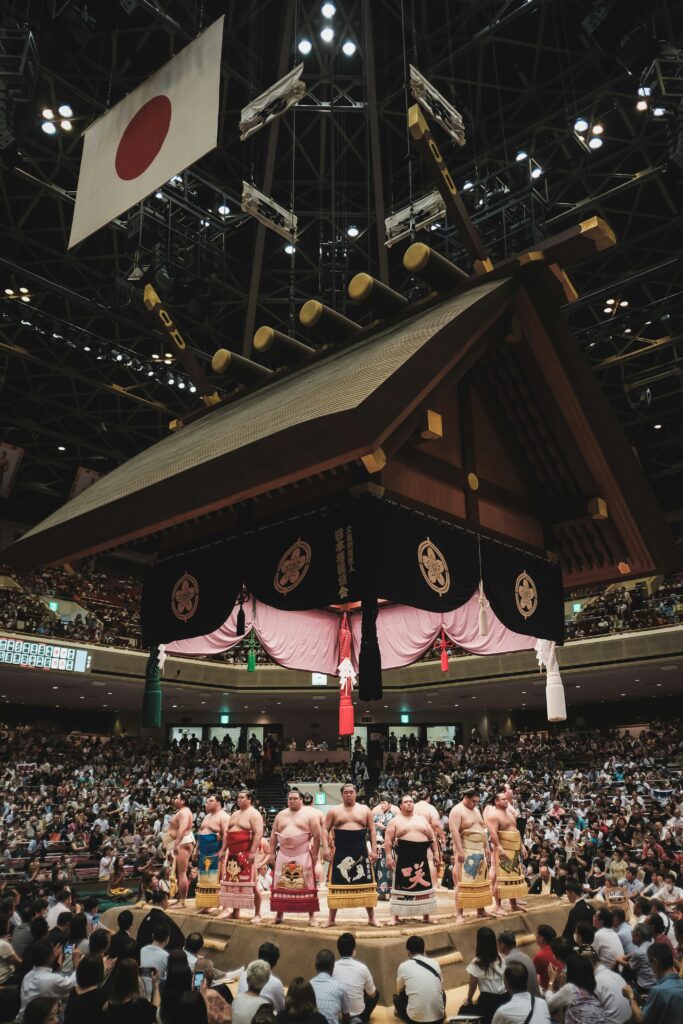
In London, the arena was filled with quiet concentration. Wrestlers later said how moved they were by the audience’s respect and manners. Each time the yokozuna stomped the ground, voices from the crowd shouted “yoisho” in Japanese. Even without knowing the words’ meaning, people joined the rhythm instinctively. It was heartwarming to see how carefully and sincerely this culture was received abroad. For those of us watching from Japan, that care itself felt like a kind of gift.
Sumo in everyday life
Sumo may be a sacred tradition, but it also lives quietly in everyday objects.
Here are a few items that let you bring a small piece of that culture into your home or daily life.
1. Fundoshi Underwear by Edoten
Buy on Amazon
If the sumo mawashi caught your eye, this traditional Japanese fundoshi might too.
Made without elastic, it offers a relaxed fit that doesn’t squeeze the body. Crafted from 100% Japanese cotton by Edoten, a maker from Ibaraki Prefecture. Simple, soft, and deeply tied to Japanese craftsmanship.
2. Men’s Yukata with Sashiko Weave by Edoten
Buy on Amazon
Also from Edoten, this men’s yukata features a beautiful sashiko (traditional Japanese stitch) pattern. It’s a garment designed for slow evenings—a perfect piece to slip into after a bath.
3. Sumo Noren Tapestry
Buy on Amazon
A tapestry with sumo wrestlers, known as a noren in Japan. Hang it in a doorway or on a wall to bring a distinctly Japanese atmosphere into your home. Just note that this particular one is not made in Japan.
4. Sumo Technique Furoshiki (Wrapping Cloth)
Buy on Amazon
A furoshiki cloth covered with fun illustrations of sumo techniques. Educational and charming, perfect for wrapping gifts or decorating a small table.
5. Sumo Wrestler Squeezie
Buy on Amazon
For those who love the sumo physique, this squishy wrestler toy offers a playful way to relieve stress. Soft, stretchy, and oddly satisfying to hold in your hand.
6. Sumo Costume Set
Buy on Amazon
If you’ve ever wanted to become a sumo wrestler—just for fun—this costume set is perfect for parties or next year’s Halloween. A light-hearted take on Japan’s most serious sport.
7. “The Perfect Guide To Sumo“ (Book)
Buy on Amazon
For those who want to learn more, the Sumo Perfect Guide offers photos and illustrations explaining the rules, history, and techniques of the sport. A visual, beginner-friendly introduction to Japan’s national pastime.
8. “The Way of Salt: Sumo and the Culture of Japan“ (Book)
Buy on Amazon
This thoughtful book explores how sumo began as a ritual to welcome the gods and pray for abundant harvests. Through that lens, it uncovers the spiritual and social roots of Japanese culture.
One reviewer described it as “the best book I’ve ever read on Japanese culture.”
